

Our Story
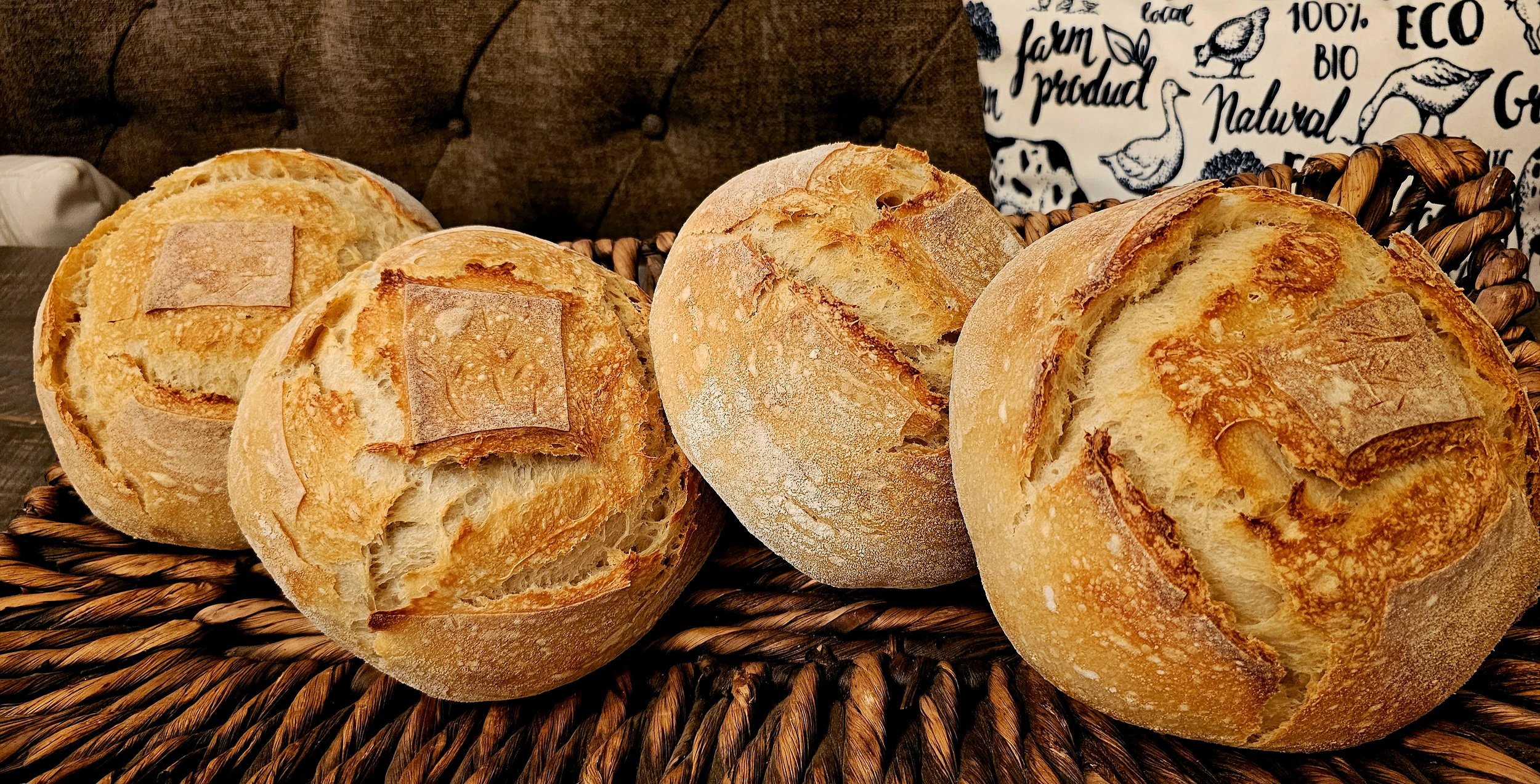
Selling our sourdough was something I stumbled upon, not something I initially aimed for. If you know anything about our farming methods, you know we have unique farming ideas for our area. We don’t use pesticides and herbicides, lime or fertilizers are not used on our pastures, and we don’t resort to chemicals to deworm our livestock or keep the flies away. Sustainability is our goal. We farm hand in hand with nature, and ingredients we don’t grow are sourced with the utmost care. Sourdough just fit naturally with these values and goals. It takes three ingredients to make and only one we’d have to purchase!
A few years ago, my mom was diagnosed with Celiac and gluten intolerance. I couldn’t reconcile this with the mother I grew up with. We had a sliced piece of buttered bread or cornbread with nearly every meal. I believed the commercially bought, additive-filled food and snacks had finally starting taking a toll on my mom’s body. Encouraging her to stop eating commercially processed foods and only eating the bread from our farm was a game-changer. All of her intolerance issues disappeared, and she was able to eat everything I baked. She relapses any time she eats out. We’ve heard similar stories from our milk customers who initially were hesitant to try our sourdough bread. But, once they did, they discovered it wasn’t a gluten sensitivity issue after all. We believe our unique sourdough and our carefully chosen ingredients are the key. Today, numerous customers add sourdough items to their weekly milk orders and even bake using our starter at home.

Trendy
It seems more and more people are taking up sourdough baking as a hobby, and there are several reasons for this trend. First, sourdough bread is known for its unique and complex flavor profile, which results from the fermentation process. Many individuals are drawn to the idea of creating a product that is not only delicious but also bears the mark of their own efforts and patience.
Second, the act of sourdough baking can be therapeutic. In today’s fast-paced world, people are seeking activities that allow them to slow down and immerse themselves in a process that requires mindfulness and attention to detail. Kneading, shaping, and watching the dough rise can be incredibly satisfying and calming. Additionally, the COVID-19 pandemic prompted an interest in home-based activities, and sourdough baking fits the bill perfectly. With more time spent at home, individuals have been exploring new culinary pursuits, and sourdough baking has become a popular choice due to its minimal ingredient requirements. There is a also a sense of nostalgia associated with sourdough bread, as it harkens back to traditional, time-honored baking practices. People are drawn to the idea of connecting with a centuries-old method of breadmaking and preserving a skill that has been passed down through generations.
Last, the sense of community and sharing that surrounds sourdough baking cannot be overlooked. Online forums, social media groups, and local bake sales have fostered a strong sense of camaraderie among sourdough enthusiasts. Sharing tips, troubleshooting problems, and exchanging starter cultures have all contributed to the rising popularity of sourdough baking as a communal and inclusive activity. There is definitely a widespread fascination with sourdough baking that shows no signs of waning.
Maintenance
To take care of a sourdough starter, it’s important to keep it fed and maintained. Begin by storing the starter in a jar or container with a loose-fitting lid to allow airflow. Keep it at room temperature if you bake frequently, or store it in the refrigerator and feed it weekly if you bake less often. To feed the sourdough starter, discard half of it and then add equal parts flour and water by weight, mixing well to incorporate air. Allow the starter to ferment at room temperature for a few hours after feeding before returning it to the refrigerator. Regularly “refresh” the starter by discarding a portion and feeding it to keep it active and healthy. Remember, different flours may affect the consistency and flavor of the starter, so consider experimenting to find the best fit for your baking preferences.
Do:
-
Use well water or filtered water to feed your starter
-
Using a high end flour will yield better results. You get out of your starter what you put in
-
Discard appropriately. If you don’t, the acidity level in you starter will continue to rise
-
It starts to smell like nail polish remover or alcohol
-
-
Keep a backup starter!
Don’t:
-
Don’t use tap water to feed your starter. You do not want the chemicals from city provided water in your starter
-
Don’t store your starter on the counter without feeding it every 12 hours
-
Don’t store your starter in the oven
-
Don’t store your starter in direct sunlight
Ratio:
-
If you know you’re going to pay extra attention to your starter, keep a feeding ration of 1:1:1
-
I have found measurement by weight is best. You can adjust how much starter you keep by adjusting the weight
-
On non-baking days, you can keep as little as 10g of starter. Feed it 10 grams of water and 10g of flour
-
-
If you know you’re going to neglect your starter, keep a feeding ration of 1:2:2
-
As an example, 10 grams starter, 20 grams water, and 20 grams flour
-
-
The stronger your starter is, the more abuse it will take
Use:
Embarking on your sourdough journey is a truly rewarding experience. Your starter is ready when it has doubled and has lots of tiny bubbles. This process is influenced by the unique temperature and humidity of your home, and is a testament to the craft’s nuances. This is where the beauty of baking sourdough lies; no two results will ever be the same. Sourdough taste is distinct to the starter and the baker. Each loaf is a reflection of your dedication and commitment. Embrace this journey, it’s yours to explore and master!

0 Comments